While Florida may have a reputation for “endless summers”, there are distinct seasonal changes in our landscapes. Many native wildflowers such as Tickseed, Black Eyed Susans, and Rosinflower go dormant in the winter. But don’t let that discourage you! A prepared planter can have a vibrant, blooming garden all year long. With Florida’s short and relatively mild winters, many of your winter blooms will last well into spring. Note that we are located in St. Petersburg, which is Zone 10a. Farther north, and some of these plants will go dormant or be unable to grow. Gardeners to our south might find these blooms last even longer.
Here are some of our favorite winter wonders:
Grayleaf/Teabush
Melochia tomentosa
year round blooms

A favorite for bees, Teabush has small, attractive pink flowers and delicate silver-green foliage. It blooms off and on all year long, especially in full sun. Teabush can grow up to 15 feet tall and 5 feet wide, and it is drought tolerant once established.
Firebush
Hamelia patens
blooms spring-fall, year round blooms in South/Central Florida

Wildlife loves Firebush for its blooms and fruit, including hummingbirds. This long-lived perennial grows up to 15 feet tall and 10 feet wide, and it’s known for its evergreen foliage and fiery flowers. Drought tolerant once established, Firebush comes in several native and Florida Friendly varieties, making it easy to fit into any landscape.
Bahama Cassia
Senna mexicana var. chapmanii
blooms fall-winter, year round blooms in South/Central Florida

A short-lived perennial, Bahama Cassia is a fairly compact shrub topping out at 6 feet tall and 4 feet wide. It’s round evergreen foliage makes for an attractive addition any time of year, and the bright yellow blooms add a pop of color from fall through winter. Cassias are a host plant for Sulphur Butterflies, making them even more valuable in a cool-weather garden. It is drought tolerant once established and can tolerate sandy soil.
Walter’s Viburnum
Viburnum obovatum
blooms winter-spring

With its lovely white flowers and dark berries, Walter’s Viburnum attracts all sorts of wildlife from bees to butterflies and birds. The foliage is an attractive emerald green, and the plant is drought tolerant once established. Walter’s Viburnum can be kept trimmed as a hedge but will grow up to 15 feet tall. There are also dwarf cultivars available such as Mrs. Schiller’s Delight and Densa.
Carolina Jessamine
Gelsemium sempervirens
blooms late winter to early spring

A fantastic native alternative to Confederate Jasmine, Carolina Jessamine can vine up to 25 feet long. Its rich yellow winter blooms attract all sorts of wildlife, including bees and hummingbirds. It doesn’t tolerate salt well but is drought tolerant once established.
Creeping Sage
Salvia misella
year round blooms

While Creeping Sage can go dormant during the winter in some zones, here in central Florida it keeps its electric blue blooms all year round. Creeping sage makes an excellent ground cover for low traffic areas. This long-lived perennial can tolerate full sun to partial shade, and is fairly drought tolerant in shadier areas. Creeping Sage is also a host plant for Fulvous Hairstreak Butterflies. Also known as River Sage and Southern River Sage.
Tropical Sage
Salvia coccinea
year round blooms
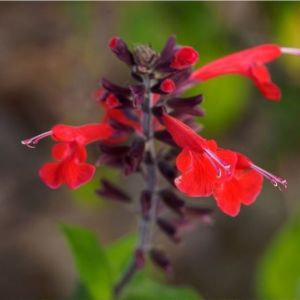
Adaptable and a prolific re-seeder, Tropical Sage is an easy, vibrant plant for any landscape. With red, white, and pink bloom colors available, there is a Tropical Sage to match any landscaping palate. This short-lived perennial can tolerate part shade to full sun and is drought tolerant once established. Tropical Sage attracts a variety of pollinators, including songbirds and hummingbirds.
These plants represent a handful of the possible flowering choices currently available at Living Roots Eco Design. Winter blooms are especially valuable for our native pollinators who find their options limited in the cooler months. With the right plants in the right places, you can create a beautiful and ecologically impactful space for all seasons. Contact us for help with your native landscape questions.
Article written by Tori Van Every
